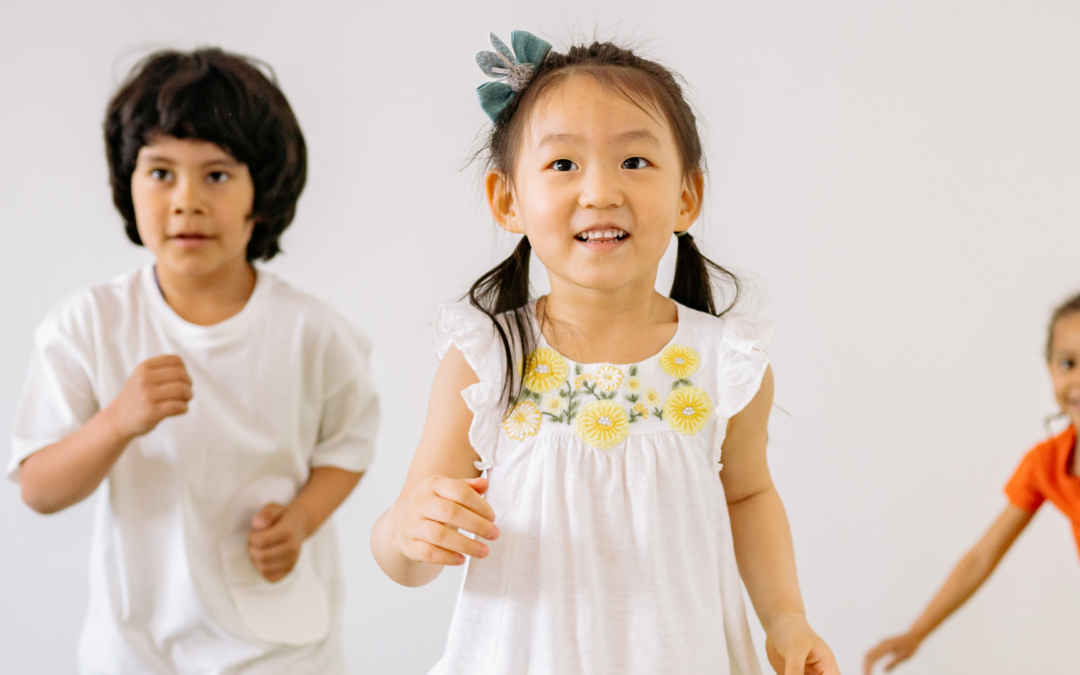
At Saige Early Learning, we believe that moving bodies are learning bodies — and the cooler winter months are absolutely no reason to slow down. Our Winter Fitness program is designed to keep children physically active, energised, and joyfully moving, even when the weather encourages staying cosy inside.
Why Physical Development Is So Important in the Early Years
The early years are a critical window for physical development. The gross motor skills, coordination, balance, and body awareness that children develop between birth and five years of age form the foundation for everything that comes after — learning to write, playing sport, riding a bike, and simply navigating the world with confidence.
Regular physical activity in the early years:
– Strengthens muscles, bones, and cardiovascular health
– Develops coordination, balance, and body awareness
– Supports healthy brain development and cognitive function
– Improves concentration, emotional regulation, and sleep quality
– Builds confidence and a positive relationship with movement
– Lays the groundwork for lifelong active habits
Australia’s physical activity guidelines recommend that children aged 3–5 years are physically active for at least three hours per day across a range of activities — and at Saige Early Learning, our winter program ensures we meet and exceed this recommendation.
Our Winter Indoor Physical Development Program
Movement Stories
We combine literacy and physical movement in our “movement stories” — children act out the narrative of a story with their whole bodies. A story about a bear waking from hibernation might involve stretching, yawning, stumbling, rolling, and roaring — an irresistible combination of imagination and physical engagement.
Yoga for Young Children
Child-friendly yoga has become one of our most loved winter activities. Using animal-themed poses (downward dog, cat, cobra, tree pose), breathing exercises, and simple relaxation techniques, children develop flexibility, balance, body awareness, and the beginnings of mindfulness — all while having a wonderful time.
Obstacle Courses
Our indoor spaces become creative obstacle courses — crawling through tunnels, balancing along lines of tape, jumping between hoops, rolling, climbing, and landing. We change the design regularly to keep children curious and challenged.
Dance and Rhythm
Dancing is one of the most complete physical activities available to young children. It develops coordination, rhythm, spatial awareness, and cardiovascular fitness — all while being pure, joyful fun. We explore movement to different styles of music, including Aboriginal and Torres Strait Islander music during NAIDOC Week.
Parachute Play
Our parachute is a firm favourite! Group parachute activities develop upper body strength, coordination, turn-taking, and cooperation — and the shared excitement of working together to make the parachute billow and float creates powerful social bonds.
Balloon Volleyball
Simple balloon volleyball indoors develops hand-eye coordination, reaction time, and spatial awareness in a gentle, non-competitive way that all children can participate in regardless of their developmental stage.
Balancing and Core Strength Activities
Balance beams, wobble boards, stepping stones, and beam-walking challenges develop the core strength and proprioception that underpin all other physical skills.
Encouraging Movement at Home in Winter
We love it when families continue movement adventures at home. Some easy winter movement ideas:
– Freeze dance — play music and freeze when it stops
– Indoor hopscotch with masking tape
– Pillow jumping courses through the living room
– Sock skating on smooth floors
– Wheelbarrow walks down the hallway
Physical activity doesn’t need equipment or a gym — just space, enthusiasm, and a child ready to move.
Keywords: winter fitness children, indoor physical activity preschool, Saige Early Learning, physical development early childhood, gross motor skills children, yoga for children, movement program early learning, active children winter, early childhood physical education Queensland, indoor play physical development
Sources and Further Reading:
– Raising Children Network – www.raisingchildren.net.au
– Australian Children’s Education & Care Quality Authority (ACECQA) – www.acecqa.gov.au
– Early Childhood Australia – www.earlychildhoodaustralia.org.au
– Australian Government Department of Health – Physical Activity Guidelines – www.health.gov.au
– Kidspot Australia – www.kidspot.com.au
– The Early Years Learning Framework (EYLF) – www.acecqa.gov.au/eylf