At Saige Early Learning, we celebrate the rich cultural diversity of our community every single day — not as a special event, but as a natural, joyful part of how we learn and live together. July, with its focus on NAIDOC Week and the winter season, gives us a beautiful opportunity to deepen our commitment to cultural education and appreciation in ways that are meaningful, respectful, and genuinely enriching for our children.
What Is Cultural Education in Early Childhood?
Cultural education is much more than learning facts about different countries or tasting food from around the world. True cultural education in the early years involves:
– Developing a genuine curiosity about people, places, and perspectives different from one’s own
– Building empathy and the ability to see the world through another’s eyes
– Understanding that there are many ways of being human — all equally valid and valuable
– Developing a secure sense of one’s own cultural identity while respecting others’
– Learning to question stereotypes and think critically about how the world is represented
At Saige Early Learning, our approach to cultural education is holistic, sustained, and embedded in our everyday practice.
Celebrating the Cultures in Our Community
Our first and most important source of cultural knowledge is the families and communities we serve. We invite families to share:
– Stories, songs, and poems from their cultural backgrounds
– Food traditions and family recipes
– Languages, greetings, and special words
– Celebrations, festivals, and significant events
– Objects, textiles, and artefacts with cultural meaning
When families see their cultures reflected in our centre, children feel seen, valued, and proud of who they are. And when children learn from each other’s families, they develop genuine, personal connections to cultural diversity — not just abstract awareness.
Indigenous Culture and NAIDOC Week
NAIDOC Week is a centrepiece of our cultural education calendar at Saige Early Learning. This week — celebrating the history, culture, and achievements of Aboriginal and Torres Strait Islander peoples — gives us the opportunity to go deeper into First Nations cultures with age-appropriate stories, art, music, language, and learning.
We approach NAIDOC Week with care, guidance from reputable resources, and deep respect for the communities whose knowledge we are sharing.
Cultural Diversity Through Books
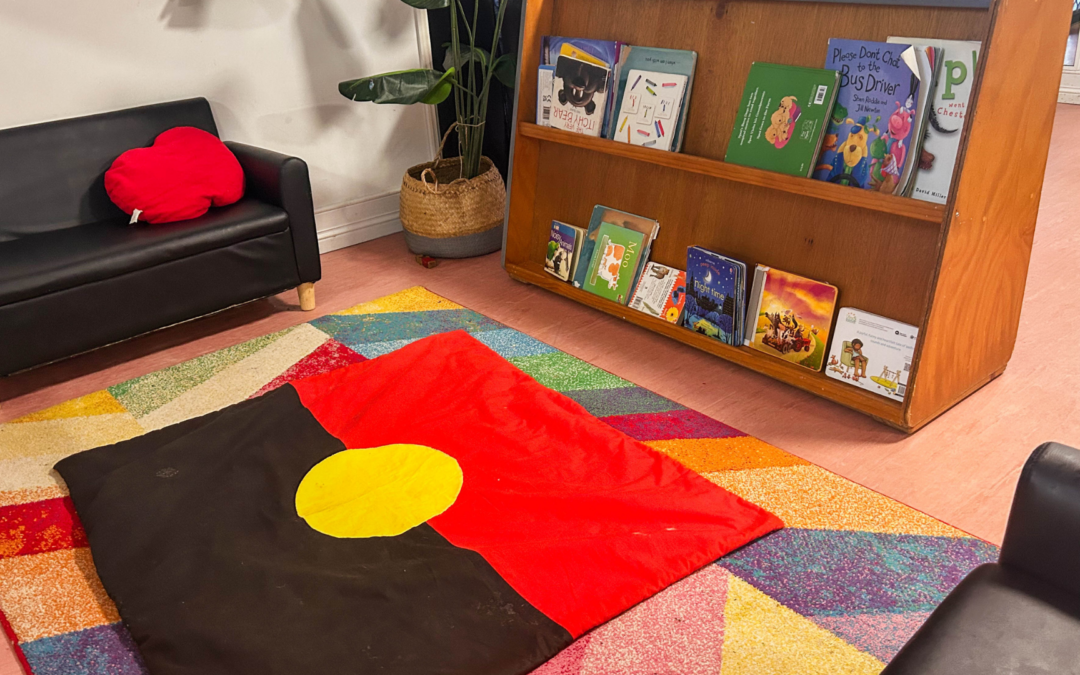
Our book collection at Saige Early Learning is deliberately diverse — featuring characters of many cultural backgrounds, stories from different parts of the world, and books by authors and illustrators from a wide range of communities. Literature is one of the most powerful tools for developing cultural empathy in young children.
Music as a Cultural Bridge
Music from around the world fills our centre throughout the year. Children experience the rhythms, instruments, and vocal styles of Aboriginal and Torres Strait Islander music, African drumming, Asian string instruments, Latin rhythms, and more. Music transcends language and speaks directly to the heart — making it an ideal vehicle for cultural connection.
Responding to Bias and Stereotypes
At Saige Early Learning, our educators are trained to notice and respond to bias, stereotypes, and exclusion when they arise — in children’s conversations, in books, in media, and in play. We create a safe, reflective space where children can ask questions, explore ideas, and learn to see people as complex, full human beings rather than simplified categories.
Keywords: cultural education early childhood, Saige Early Learning, diversity and inclusion preschool, NAIDOC Week cultural appreciation, cultural awareness children, multicultural early learning, First Nations culture preschool, community cultural celebration, cultural identity early years, early learning Queensland cultural
Sources and Further Reading:
– Raising Children Network – www.raisingchildren.net.au
– Australian Children’s Education & Care Quality Authority (ACECQA) – www.acecqa.gov.au
– Early Childhood Australia – www.earlychildhoodaustralia.org.au
– NAIDOC Committee – www.naidoc.org.au
– Reconciliation Australia – www.reconciliation.org.au
– The Early Years Learning Framework (EYLF) – www.acecqa.gov.au/eylf